Hotel Guest Rights List Scotland 2026: 5% Visitor Levy

Updated: May 28

Understanding your legal rights as a hotel guest in Scotland can feel overwhelming, especially with new regulations like the 5% visitor levy launching in Edinburgh in 2026. Whether you’re a tourist exploring historic sites or a business traveler attending conferences, knowing what protections and obligations apply to your stay helps you advocate for fair treatment and avoid unexpected costs. This article delivers a clear, itemized hotel guest rights list covering safety standards, consumer protections, financial impacts, licensing requirements, and privacy safeguards to empower you during your Scottish accommodation experience.
Table of Contents
Key Takeaways
Point | Details |
Safety Standards | Hotels must maintain smoke, heat, and CO alarms, valid gas certificates, electrical testing, and fire risk assessments to protect guests. |
Consumer Protections | Scottish law guarantees clear contracts, fair cancellation terms, and complaint mechanisms for guests. |
Visitor Levy Impact | Edinburgh charges a 5% levy on accommodation from July 2026, capped at 5 nights per stay. |
Licensing Requirements | Short-term lets must be licensed since October 2022, ensuring safety and quality standards. |
Privacy Rights | Hotels must comply with GDPR, securing personal data and providing guests access to their information. |
Selection Criteria for Assessing Your Hotel Rights in Scotland
Before booking your Scottish accommodation, you need a framework for evaluating whether your chosen hotel respects guest rights and complies with current regulations. This framework centers on five critical areas: safety compliance, consumer protection enforcement, financial transparency regarding taxes and fees, proper licensing, and privacy safeguards. Each criterion directly impacts your experience and legal standing during your stay.
Scottish hotel guest laws mandate legal compliance with fire and safety standards, consumer protection rules, visitor levy and licensing impacts. Understanding these requirements helps you spot reputable establishments.
Key evaluation criteria include:
Safety regulations covering fire alarms, gas certificates, and electrical systems
Consumer law protections for contracts, refunds, and complaint resolution
Financial regulations like the visitor levy and hospitality relief schemes
Licensing status for short-term accommodations
Data protection measures safeguarding your personal information
Pro Tip: Always review hotel booking terms in Scotland before confirming your reservation to understand cancellation policies and fee structures upfront.
When assessing hotels, verify they display current safety certifications and clearly communicate their policies. Ask about licensing compliance, especially for smaller guest houses or short-term rentals. Check that pricing breakdowns include any applicable levies so you can budget accurately. Evaluating these criteria before booking prevents unpleasant surprises and ensures your accommodation meets legal standards designed to protect you.
Safety and Fire Regulations in Scottish Hotels
Safety standards form the foundation of guest protection in Scotland. Every hotel and guest house must meet strict requirements designed to prevent fires, detect hazards early, and maintain safe electrical and gas systems. These regulations apply regardless of property size or type.
Hotels in Scotland must have smoke, heat, and carbon monoxide alarms, valid gas safety certificates within 12 months, electrical and portable appliance testing, and perform fire risk assessments. These measures directly prevent injury and save lives.
Mandatory safety standards include:
Smoke alarms in living areas and circulation spaces, heat detectors in kitchens, and carbon monoxide alarms near fuel-burning appliances
Gas Safety Certificates renewed annually by Gas Safe registered engineers
Electrical Installation Condition Reports and Portable Appliance Testing ensuring all systems and devices are safe
Current fire risk assessments documenting evacuation routes, fire fighting equipment, and emergency procedures
Compliance with repairing standards including Legionella risk management for water systems
Pro Tip: When you arrive at your hotel, locate fire exits and read the evacuation plan posted in your room. Familiarizing yourself with these details takes two minutes and could prove critical in an emergency.
You have the right to request proof of these certifications. Reputable hotels display their safety credentials publicly or provide them upon request. If you notice missing alarms, expired certificates posted in common areas, or unsafe conditions, report these immediately to management and, if unresolved, to local authorities. Your vigilance protects not just yourself but future guests. Learn more about guest house safety standards that exceed minimum requirements.
Hotel Guest Legal Protections and Consumer Rights
Beyond physical safety, Scottish law protects your rights as a consumer when you book accommodation. These protections govern how hotels must treat you, what information they must disclose, and how disputes should be resolved. Understanding these rights prevents hotels from imposing unfair terms or hidden fees.
Consumer protection laws mandate clear cancellation and refund policies, Licensing Act 2003 regulates alcohol sales, and guests have rights to fair contract terms and effective complaints handling. These protections create a level playing field between guests and accommodation providers.
Your consumer rights include:
Transparent contracts spelling out room rates, included services, cancellation deadlines, and refund conditions before you book
Protection from misleading advertising or descriptions that don’t match the actual accommodation
Access to formal complaint procedures if service quality falls short or the hotel breaches contract terms
Rights under the Licensing Act 2003 regarding alcohol service standards and hours if the hotel operates a bar or restaurant
If your hotel fails to honor its published policies or provides substandard service, you can escalate complaints through consumer protection channels. Document everything: save booking confirmations, photograph problems, and keep correspondence. These records support your case if you need to pursue refunds or formal action. Most hotels want to resolve issues quickly to maintain their reputation, so raising concerns promptly often leads to satisfactory solutions. Explore more about hotel service and guest rights when booking premium accommodations.
Visitor Levy and Impact on Guests
Starting July 24, 2026, Edinburgh becomes the first Scottish city to implement a mandatory visitor levy. This new tax directly affects your accommodation costs and represents a significant regulatory change you need to factor into your travel budget.

Edinburgh will implement a 5% visitor levy on overnight stays from July 24, 2026, charged on full accommodation cost including commissions, capped at 5 consecutive nights. This surcharge applies universally to all overnight guests. The levy must be clearly disclosed on invoices for guest transparency, ensuring you know exactly what you’re paying.
Key visitor levy details:
5% charge applies to total accommodation cost, including any booking platform fees or commissions
Levy caps at 5 consecutive nights, so stays longer than 5 nights only pay the levy for the first 5
Hotels must itemize the levy separately on invoices so guests see the breakdown
Projected £50 million annual revenue will be reinvested in visitor services benefiting guests and residents through improved infrastructure
Payment goes directly to the city council, not the hotel
Scenario | Base Cost | 5% Levy | Total |
2-night stay | £200 | £10 | £210 |
5-night stay | £500 | £25 | £525 |
7-night stay | £700 | £35 (5 nights only) | £735 |
“The visitor levy ensures tourists contribute fairly to maintaining Edinburgh’s attractions and infrastructure while keeping the burden manageable through the 5-night cap.”
When budgeting for Edinburgh trips after July 2026, add 5% to your accommodation estimate for the first five nights. This transparency helps you plan accurately. The funds support services you’ll use during your stay, from public transport to cultural sites, so the levy indirectly enhances your experience. If you’re traveling for business, check whether your employer’s travel policy covers the levy or if you’ll need to absorb the cost. Discover how the visitor levy impacts business travel planning.
Hospitality Relief and Regulatory Context
While guests face new levies, Scottish hotels benefit from hospitality relief schemes that help stabilize costs and maintain service quality. Understanding this regulatory context explains why some hotels can keep rates competitive despite rising operational expenses.
40% non-domestic rates relief applies to hospitality premises with rateable value up to £51,000, capped at £110,000 per business for 2025-26. This substantial relief reduces the tax burden on qualifying properties. Applicants must provide accurate business rates reference and evidence of qualifying hospitality use to receive the benefit.
Relief scheme characteristics:
40% reduction on non-domestic rates helps hotels, guest houses, and similar accommodations control overhead costs
Relief capped at £110,000 per business for the 2025-26 financial year, protecting smaller independent operators
Certain remote locations like Cape Wrath and Knoydart are excluded from the scheme, potentially affecting availability and pricing in those areas
Properties must prove they operate as genuine hospitality businesses with verified accounts and proper classification
Relief indirectly benefits guests by helping hotels maintain competitive pricing and reinvest in facility improvements
This relief doesn’t directly reduce your bill, but it supports the financial health of hotels you stay in. Properties receiving relief can afford to upgrade facilities, maintain staff levels, and absorb some cost increases without immediately passing them to guests. When comparing hotel prices, consider that properties in remote excluded areas may charge more due to higher operating costs without relief benefits. Learn about hospitality relief and booking affordability when planning budget-conscious trips.
Short-Term Let Licensing and Guest Rights
If you’re considering Airbnb, vacation rentals, or other short-term accommodations instead of traditional hotels, licensing requirements directly affect your rights and the property’s legal status.
All short-term let properties must be licensed and meet safety, quality, and mandatory standards including fire, energy, and risk management. This licensing became mandatory on October 1, 2022, bringing short-term rentals under formal regulation.
Licensing requirements for short-term lets:
Mandatory licensing for all properties offered for short-term rental, with hosts facing penalties for operating without a license
Compliance with identical safety standards as hotels, including alarms, gas certificates, and electrical testing
Minimum quality standards covering cleanliness, amenity provision, and property condition
Energy efficiency requirements ensuring properties meet environmental standards
Local council oversight with inspection powers to verify compliance
Before booking a short-term let, verify the property’s licensing status. Licensed properties give you the same safety and quality protections as hotels, plus legal recourse if standards aren’t met. Unlicensed properties operate illegally, exposing you to safety risks and leaving you with limited options if problems arise. You can often check licensing status through local council websites or ask the host directly for their license number. Understand more about short-term let licensing and guest rights to book safely.
Guest Privacy and Data Protection
When you check into any Scottish accommodation, you provide personal information including your name, address, payment details, and potentially identification documents. Scottish and UK law strictly regulate how hotels collect, store, and use this data.
Hotels must implement data protection measures compliant with GDPR to secure guest personal information. You have the right to know what data is collected, how it’s used, who accesses it, and how long it’s retained. Accommodation providers must maintain clear privacy policies explaining these practices in plain language.
Your privacy rights include:
Right to access your personal data held by the hotel and request corrections if information is inaccurate
Protection against unauthorized sharing of your data with third parties without your explicit consent
Security measures preventing data breaches, with hotels required to notify you promptly if breaches occur
Right to request deletion of your data after your stay, subject to legal retention requirements for financial records
Clear communication about how booking platforms and hotels share information if you book through third parties
Reputable hotels display privacy policies on their websites and at reception. If you have concerns about data handling, ask specific questions about storage duration, security measures, and third-party access. Hotels that resist transparency about data practices raise red flags. Your personal information deserves the same protection as your physical safety during your stay. Explore comprehensive details on guest privacy rights in Scotland and review hotel data protection and security measures.
Summary Comparison of Guest Rights and Protections
After exploring individual rights categories, this comparison table consolidates the information to help you quickly assess how different protections apply across accommodation types and situations.
Protection Category | Key Requirements | Guest Benefits | Compliance Verification |
Safety & Fire | Smoke/heat/CO alarms, gas certificates, electrical testing, fire risk assessments | Early hazard detection, emergency preparedness, injury prevention | Ask for certificates, observe alarm presence |
Consumer Rights | Clear contracts, fair cancellation terms, complaint procedures | Protection from unfair fees, recourse for service failures | Review booking terms, check cancellation policy |
Visitor Levy | 5% on accommodation cost, capped at 5 nights, applies from July 2026 in Edinburgh | Transparent pricing, funding for visitor infrastructure | Check invoice breakdown, verify levy itemization |
Hospitality Relief | 40% rates relief for qualifying properties, £110,000 cap | Indirect price stability, facility investment | Not directly visible to guests, affects hotel viability |
Licensing | Mandatory for short-term lets since October 2022, safety and quality standards | Ensures minimum standards, legal recourse | Verify license number with local council |
Privacy & Data | GDPR compliance, data security, access rights | Personal information protection, control over data | Review privacy policy, ask about data practices |
This table highlights that your rights span multiple domains, each serving distinct protective functions. Safety regulations prevent physical harm. Consumer protections ensure fair treatment and transparent transactions. Financial regulations like the levy and relief schemes affect pricing and hotel sustainability. Licensing guarantees baseline standards across all accommodation types. Privacy laws secure your personal information. Together, these protections create a comprehensive framework safeguarding your Scottish hotel experience.
Situational Recommendations for Hotel Guests in Scotland
Applying your rights effectively depends on your specific travel situation. Different guest types face unique priorities and risks.
Recommendations by traveler type:
Tourists visiting Edinburgh: Prioritize licensed hotels displaying current safety certificates. Budget for the 5% visitor levy starting July 2026. Choose accommodations with clear cancellation policies to protect against itinerary changes. Verify fire exits and emergency procedures upon arrival.
Business travelers: Select hotels with robust data protection practices to secure sensitive work information. Confirm whether company travel policies cover the visitor levy. Look for accommodations offering reliable internet and business amenities. Keep detailed receipts itemizing the levy for expense reporting.
Short-term let guests: Verify licensing status before booking through online platforms. Confirm the property meets safety standards equivalent to hotels. Ask hosts for documentation of gas certificates and alarm testing. Ensure the rental agreement clearly states terms and host contact information.
Extended stay visitors: For stays beyond 5 nights in Edinburgh, calculate levy savings after the cap. Choose hotels with hospitality relief benefits, often reflected in better value and facility quality. Establish relationships with staff to address issues promptly.
Budget-conscious travelers: Compare total costs including levies across different accommodation types. Consider guest houses in areas outside Edinburgh to avoid the levy while staying close to attractions. Review business traveler accommodation tips and tourist hotel safety recommendations for value-focused strategies.
Pro Tip: Keep digital and physical copies of all booking confirmations, payment receipts, and correspondence with hotels. If disputes arise, this documentation proves invaluable for asserting your rights and pursuing resolution through official channels.
Regardless of your situation, proactive research and documentation protect your interests. Don’t hesitate to ask questions before booking and during your stay. Hotels that respect guest rights welcome inquiries and provide transparent answers. Your willingness to engage demonstrates you understand your protections, often encouraging better service.
Discover Your Ideal Stay at Stag & Barrel Guest House
Navigating Scottish hotel regulations and guest rights becomes simpler when you choose accommodation that prioritizes compliance and guest satisfaction. Stag & Barrel Guest House in Elgin offers licensed, safe, and welcoming rooms for both tourists and business travelers.
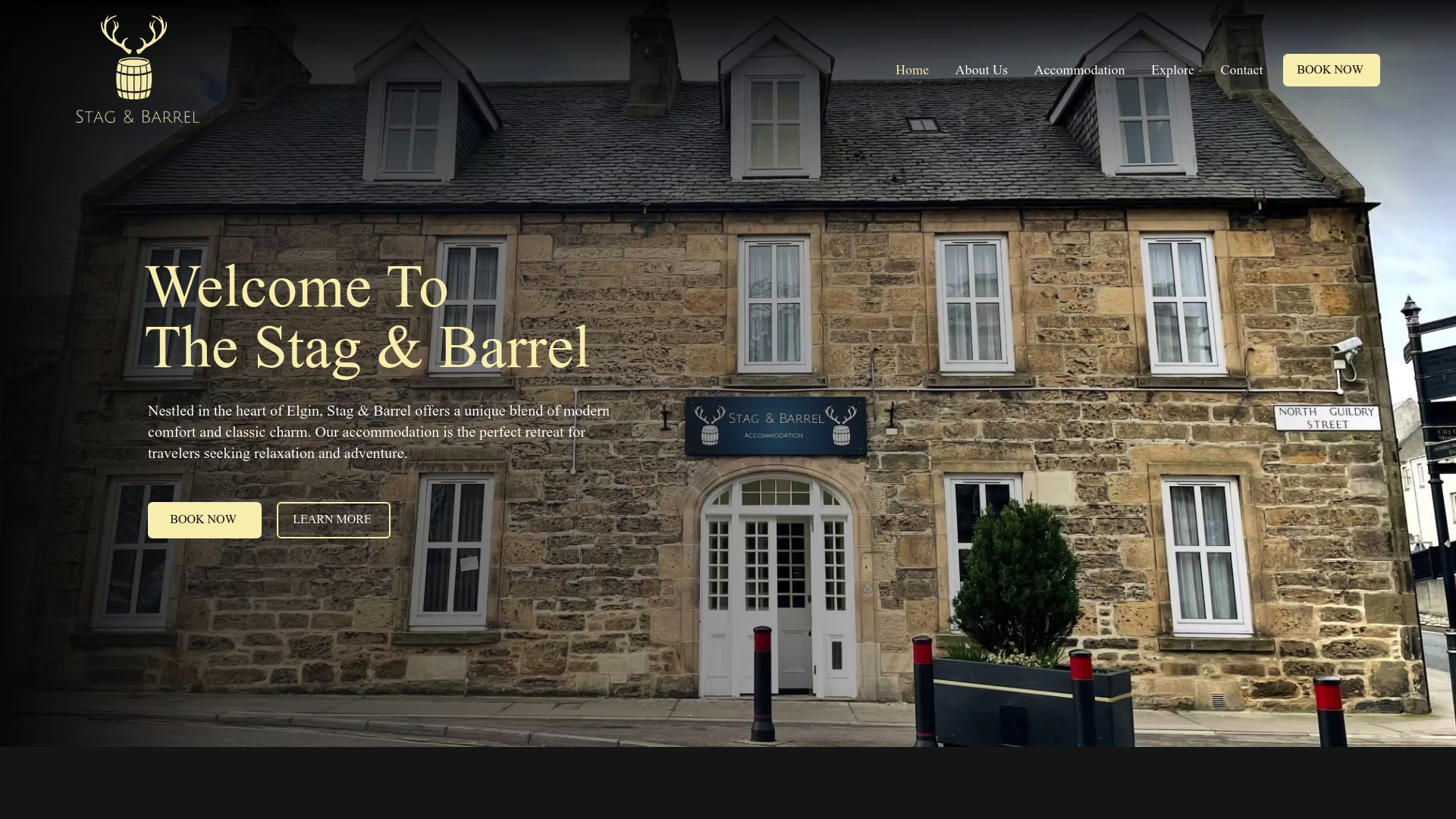
Our property meets all Scottish safety standards, maintains current certifications, and provides transparent booking terms that respect your consumer rights. We understand the importance of privacy, implementing robust data protection measures to secure your personal information throughout your stay. Whether you’re exploring the Speyside whisky trail or attending business meetings in the region, our team ensures your experience reflects the high standards Scottish hospitality regulations require.
We offer clear pricing with no hidden fees, detailed cancellation policies, and responsive service when you have questions or concerns. Our commitment goes beyond legal compliance to create stays that combine comfort, security, and value. When you book your stay at Stag & Barrel Guest House, you’re choosing accommodation that takes your rights seriously.
Business travelers appreciate our business-friendly accommodation options including reliable Wi-Fi and quiet work spaces. All guests benefit from our attention to detail, from properly maintained safety equipment to respectful hotel guest etiquette guidance that enhances everyone’s experience. Discover the difference that truly compliant, guest-focused accommodation makes.
Frequently Asked Questions
What are the key safety standards hotels must meet in Scotland?
Scottish hotels must install and maintain smoke alarms, heat detectors, and carbon monoxide alarms throughout the property. They need valid Gas Safety Certificates renewed within the last 12 months, current Electrical Installation Condition Reports, regular Portable Appliance Testing, and updated fire risk assessments covering evacuation routes and emergency procedures.
How will the Edinburgh visitor levy affect my hotel bill starting in 2026?
From July 24, 2026, Edinburgh hotels charge a 5% levy on your total accommodation cost, including any booking fees. The levy caps at 5 consecutive nights, so a 7-night stay only pays the levy for the first 5 nights. Hotels must clearly itemize this charge separately on your invoice.
Are short-term lets in Scotland required to be licensed?
Yes, all short-term rental properties must hold a valid license since October 1, 2022. Licensed properties meet the same safety standards as hotels, including fire alarms, gas certificates, and electrical testing. You can verify licensing status through local council websites before booking.
What rights do I have if my hotel cancels my reservation?
Scottish consumer protection laws require hotels to honor confirmed bookings or provide adequate compensation. You’re entitled to a full refund if the hotel cancels without valid cause, plus reimbursement for additional costs if you must book alternative accommodation at a higher rate. Document all communication and expenses to support your claim.
How is my personal data protected when staying at a Scottish hotel?
Hotels must comply with GDPR, implementing security measures to protect your personal information from unauthorized access or breaches. You have the right to know what data they collect, how it’s used, and how long it’s kept. Hotels must provide clear privacy policies and allow you to request access to or deletion of your data.
Recommended


Comments