Understanding room types in hotels for your 2026 trip

Updated: May 15

Most travellers believe hotel rooms differ only by price and square footage, yet the variety of room types available can dramatically affect your comfort, convenience, and overall experience. From standard singles to presidential suites, each category offers distinct features tailored to different needs and budgets. Understanding these differences helps you choose accommodation that matches your travel purpose, whether you’re on a business trip, family holiday, or romantic getaway. This guide explains the major hotel room types, their defining characteristics, and practical strategies for selecting the best option for your 2026 travels.
Table of Contents
Key takeaways
Point | Details |
Room types vary significantly | Hotels offer standard, deluxe, suite, and accessible rooms, each with different sizes, amenities, and price points. |
Match room to travel purpose | Business travellers need workspaces whilst families benefit from suites with separate living areas. |
Accessibility matters for many | Roughly 20% of UK travellers require rooms with mobility features like grab bars and wider doorways. |
Direct booking secures preferences | Contacting hotels directly increases your chances of getting specific room features and locations. |
Luxury suites offer premium perks | Executive and presidential suites include exclusive amenities like spa access and private balconies. |
Common hotel room types and their features
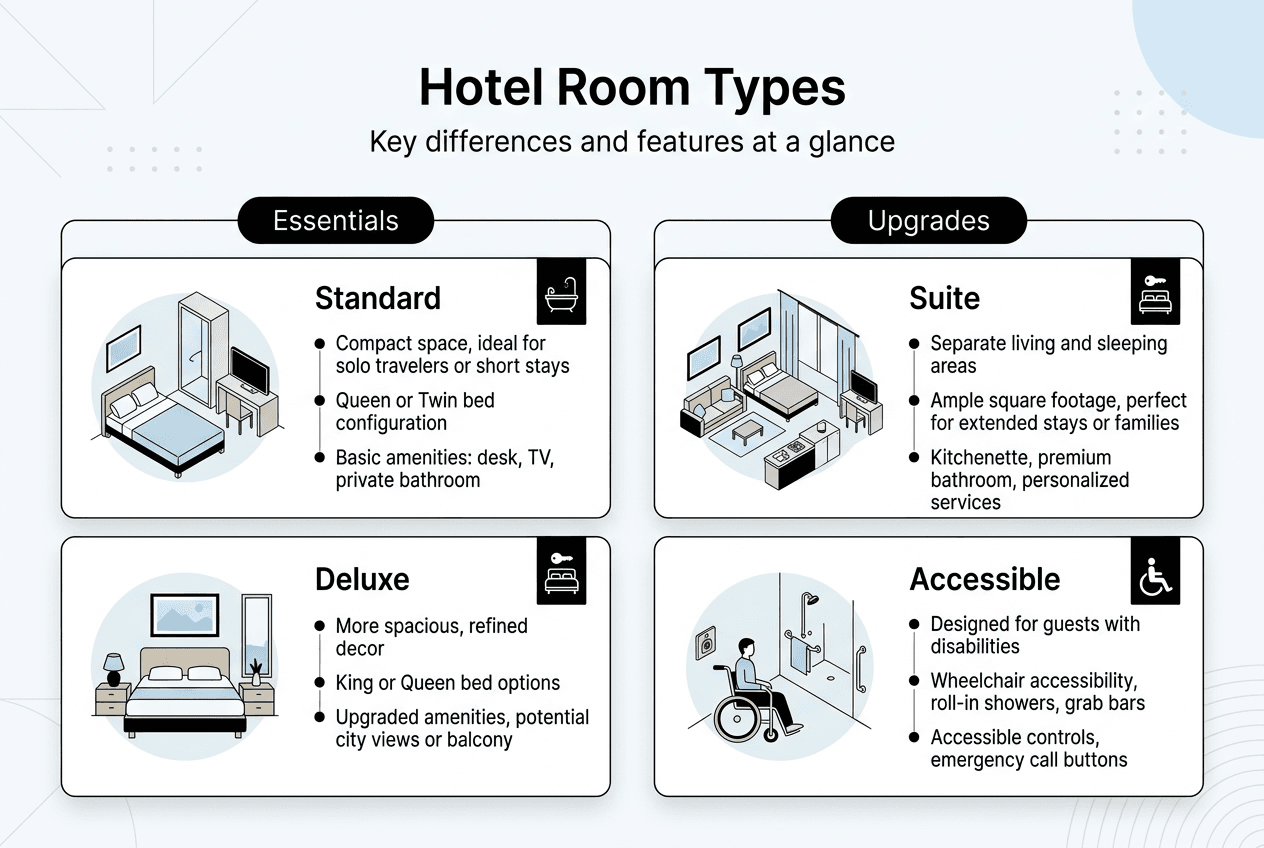
Navigating hotel room options becomes straightforward once you understand the core categories and what distinguishes them. Hotels commonly offer room types such as standard, deluxe, suite, and accessible rooms, each varying in size and amenities to serve different guest requirements and budgets.
Standard rooms form the foundation of most hotel inventories. These spaces typically feature one double bed or two singles, a compact bathroom, basic furnishings like a wardrobe and desk, and essential amenities such as television and Wi-Fi. Standard rooms work brilliantly for solo travellers or couples seeking comfortable overnight accommodation without extra frills. You’ll find them priced at the lower end of a hotel’s range, making them ideal when you plan to spend most of your time exploring rather than lounging in your room.
Deluxe rooms step up the experience with enhanced features. Expect larger floor space, superior furnishings, better views, upgraded bedding, and additional seating areas. Many deluxe rooms include coffee makers, mini-fridges, or premium toiletries that standard rooms lack. The price increase over standard rooms typically ranges from 20% to 40%, depending on location and hotel category. These rooms suit travellers who value extra comfort and space but don’t require separate living areas.
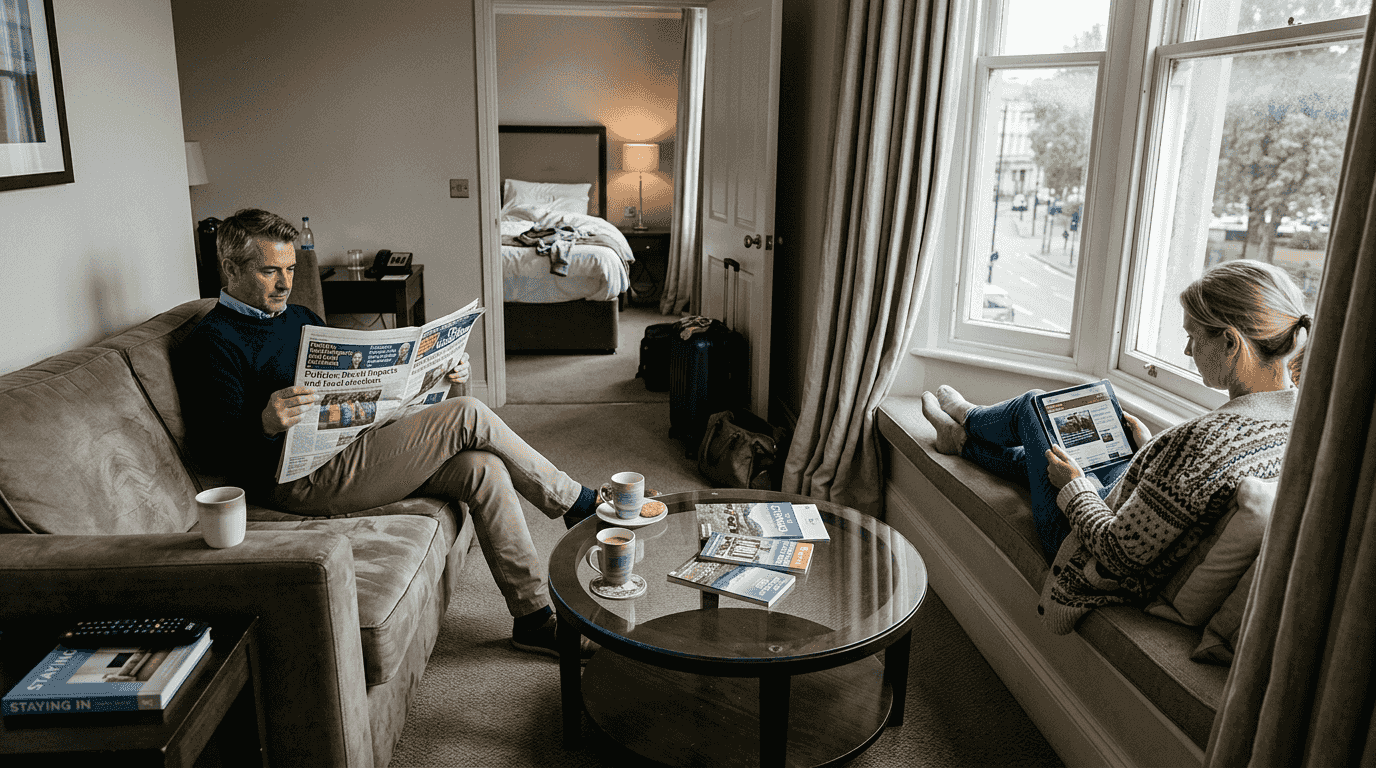
Suites represent a significant upgrade in both space and amenities. Unlike standard or deluxe rooms, suites contain distinct zones, usually a bedroom plus a separate living room with sofa, dining table, and entertainment system. Many suites feature kitchenettes, multiple bathrooms, or private balconies. The separation of spaces makes suites particularly valuable for families, longer stays, or business travellers who need to host informal meetings. Pricing for suites starts around double the standard room rate and climbs steeply for premium categories.
Accessible rooms cater specifically to guests with mobility, visual, or hearing needs. These rooms incorporate wider doorways for wheelchair access, roll-in showers with grab bars, lowered peepholes and light switches, visual fire alarms, and telephone amplifiers. Accessible rooms maintain the same comfort standards as other categories whilst adding crucial features that make independent travel possible for guests with disabilities. Most hotels reserve a percentage of their inventory as accessible rooms, though availability can be limited during peak periods.
Pro Tip: Always verify the specific features of your chosen room type directly with the hotel before booking, as definitions and inclusions can vary significantly between properties and chains.
Room Type | Typical Size | Key Features | Price Range |
Standard | 20-30 sqm | Basic furnishings, essential amenities, compact bathroom | £60-120/night |
Deluxe | 30-40 sqm | Enhanced furnishings, better views, upgraded amenities | £90-180/night |
Suite | 50-100+ sqm | Separate living area, kitchenette, premium features | £180-500+/night |
Accessible | Varies | Mobility features, visual/audio aids, barrier-free design | Similar to equivalent standard/deluxe |
Choosing the right room type for your travel needs
Selecting the appropriate room type requires honest assessment of your travel purpose and priorities. Different trips demand different features, and matching your room to your actual needs prevents both overspending and uncomfortable compromises.
Start by identifying your primary travel purpose. Business travellers benefit from rooms offering dedicated workspaces and quiet environments, making deluxe rooms or junior suites with proper desks and ergonomic chairs worthwhile investments. Leisure travellers focused on sightseeing might find standard rooms perfectly adequate, as you’ll likely spend minimal time indoors. Family holidays often justify suite bookings, where separate living spaces let children sleep whilst adults remain awake, and kitchenettes enable budget-friendly meals and snacks.
Evaluate essential features systematically. Consider bed configuration first, whether you need a king bed, twins, or family arrangements with extra beds or sofa beds. Assess workspace requirements if you’ll be working remotely or catching up on emails. Check Wi-Fi quality and availability, particularly crucial for business use. Review bathroom facilities, as some travellers prioritise bathtubs for relaxation whilst others prefer spacious showers. Examine storage space if you’re staying longer than a few nights or travelling with substantial luggage.
Accessibility considerations are essential for 20% of UK travellers, influencing room choice significantly. If you or your travel companions have mobility challenges, book accessible rooms well in advance. These rooms often sell out quickly because hotels maintain limited inventory. Specify your exact requirements when booking, whether you need grab bars, visual alerts, or hearing assistance devices, as accessible room features vary.
Balance your budget against desired comforts realistically. Upgrading from standard to deluxe might cost an extra £30-50 per night, which over a week-long stay adds £210-350 to your total. Ask yourself whether enhanced space and amenities justify that expense for your particular trip. Sometimes the answer is yes, other times you’d rather allocate those funds to dining or activities.
Consider location within the hotel carefully. Ground floor rooms offer convenience for travellers with heavy luggage or mobility concerns but may experience more noise from lobby traffic. Upper floors provide better views and quieter environments but require lift dependency. Corner rooms typically offer more windows and natural light. Rooms near lifts, ice machines, or housekeeping storage can be noisier, whilst those at corridor ends tend to be quieter.
Pro Tip: For family trips or stays exceeding four nights, calculate the cost difference between booking two standard rooms versus one suite, as suites sometimes prove more economical whilst offering superior comfort and convenience.
Luxury and suite room options in modern hotels
Premium accommodation categories deliver elevated experiences through superior space, exclusive amenities, and personalised service. Understanding luxury room tiers helps you choose appropriately when celebrating special occasions or seeking exceptional comfort.
Luxury guest houses and premium hotels offer suites with additional living spaces, upscale furnishings, and exclusive guest amenities that transform your stay from functional to memorable. The distinction between suites and standard rooms extends far beyond square footage, encompassing design quality, service levels, and access to premium facilities.
Junior suites represent the entry point into luxury categories. These rooms blur the line between deluxe rooms and full suites by offering enhanced space and upgraded amenities without complete room separation. Expect a larger bedroom with distinct sitting area, premium bedding and linens, upgraded bathroom fixtures, and often a small refrigerator or coffee station. Junior suites typically cost 50-80% more than standard rooms but deliver substantially more comfort for couples seeking extra space or solo business travellers wanting proper work and relaxation zones.
Executive suites cater specifically to business travellers and professionals. These accommodations feature separate bedrooms and living rooms, dedicated workspaces with large desks and ergonomic seating, enhanced technology including multiple screens and video conferencing capability, and sometimes access to executive lounges with complimentary breakfast and evening refreshments. The living room provides suitable space for informal meetings or client entertainment. Executive suites generally price at double to triple standard room rates.
Presidential suites occupy the pinnacle of hotel accommodation. These expansive spaces often span entire floors or building corners, featuring multiple bedrooms, grand living and dining areas, gourmet kitchens, luxury bathrooms with spa features, private balconies or terraces, and sometimes dedicated butler service. Furnishings rival high-end residential interiors with designer pieces, original artwork, and premium materials throughout. Presidential suites serve celebrities, executives, and travellers celebrating milestone occasions, with nightly rates reaching thousands of pounds.
Exclusive amenities distinguish luxury suites from standard accommodation. Common premium features include Nespresso machines or premium coffee service, designer toiletries from brands like Molton Brown or Aromatherapy Associates, pillow menus offering various firmness and fill options, turndown service with chocolates or amenities, bathrobes and slippers, and priority restaurant reservations. Many luxury suites provide access to private lounges, spa facilities, or rooftop terraces unavailable to standard room guests.
Selecting the right suite can enhance guest experience significantly in terms of comfort and services, particularly for longer stays or special occasions where the accommodation itself contributes to the overall experience rather than simply providing a place to sleep.
Pro Tip: Contact hotels directly about package deals that bundle suite upgrades with spa treatments, dining credits, or late checkout, as these packages often deliver better value than booking room and services separately.
Suite Type | Average Size | Signature Features | Typical Pricing |
Junior Suite | 40-50 sqm | Enhanced space, sitting area, upgraded amenities | £150-280/night |
Executive Suite | 60-80 sqm | Separate rooms, workspace, lounge access | £250-450/night |
Presidential Suite | 100-300+ sqm | Multiple rooms, luxury finishes, butler service | £800-3000+/night |
How to book and confirm your ideal hotel room type
Securing your preferred room type requires strategic booking practices and clear communication. Following systematic steps prevents disappointment and ensures your accommodation matches expectations when you arrive.
Begin by researching room types thoroughly on hotel websites rather than relying solely on third-party booking platforms. Hotel websites typically provide more detailed room descriptions, accurate photographs from multiple angles, and comprehensive amenity lists. Read descriptions carefully, noting specific features like bed sizes, bathroom configurations, view types, and included amenities. Compare several room categories to understand the incremental benefits and costs of upgrading.
Book directly through the hotel when possible, as this establishes a direct relationship that facilitates special requests and often provides better cancellation flexibility. Third-party sites may offer lower rates occasionally, but direct bookings give you leverage for room preferences and upgrades. Many hotels match or beat third-party rates if you contact them directly and reference the lower price you found elsewhere.
Direct communication with hotels often secures preferred room types and special requests more reliably than third-party sites. After booking, call or email the hotel to confirm your reservation details and communicate specific preferences. Specify your desired floor level, bed configuration, view preference, and any accessibility requirements. Whilst hotels cannot always guarantee specific room assignments until check-in, noting preferences in your reservation increases the likelihood of accommodation.
Make special requests in writing when booking or immediately after. If you need a quiet room away from lifts, a ground floor location for accessibility, connecting rooms for family travel, or early check-in due to flight schedules, document these requests in your reservation. Hotels honour written requests more reliably than verbal mentions at check-in when room inventory may be limited.
Verify your booking details 48-72 hours before arrival. Contact the hotel to reconfirm your reservation, room type, special requests, and arrival time. This final check catches any booking errors or miscommunications whilst there’s still time to resolve them. Confirm cancellation policies and any prepayment requirements to avoid surprises.
Consider joining hotel loyalty programmes even for occasional travel. Membership often provides benefits like room upgrade priority, late checkout, and bonus amenities at no cost. Some programmes offer guaranteed room type availability for members booking in advance. Accumulating points can lead to free nights or upgrades on future stays.
Pro Tip: Photograph or screenshot your booking confirmation showing room type, rate, and special requests, keeping this accessible on your phone for reference during check-in if any discrepancies arise.
Discover your ideal accommodation at Stag & Barrel Guest House
Now that you understand how different room types serve various travel needs, finding accommodation that matches your preferences becomes crucial for your 2026 Scottish adventures. Stag & Barrel Guest House in Elgin, Moray, offers thoughtfully designed rooms combining comfort with distinctive whisky-themed character that reflects the region’s heritage.
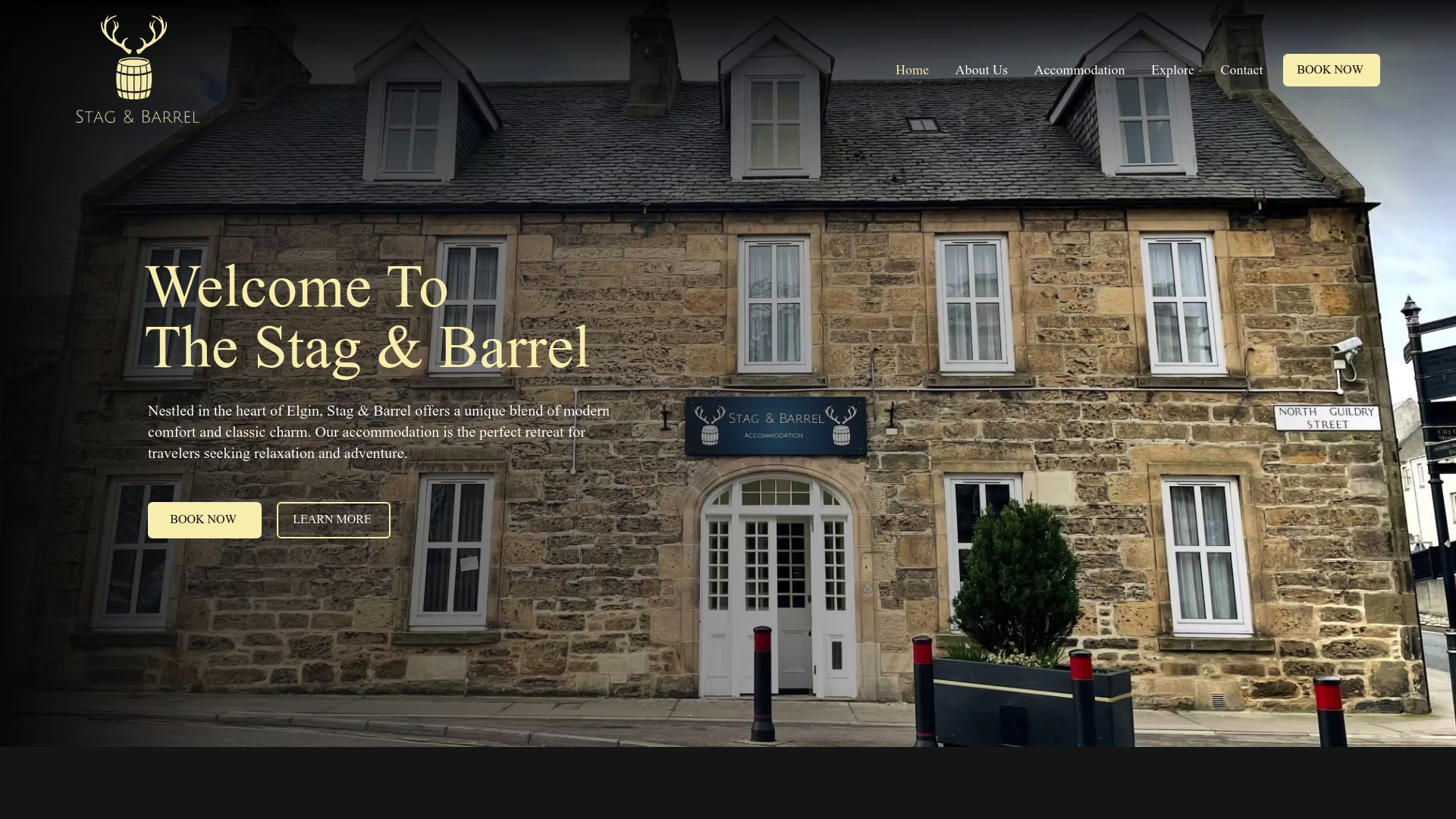
Whether you’re visiting for business, exploring Speyside distilleries, or enjoying a family break, our range of room options provides the space and amenities suited to your requirements. Each room balances modern conveniences with traditional Scottish hospitality, ensuring your stay delivers both comfort and memorable character. Explore our accommodation options to find the perfect room for your Moray visit and book directly for the best rates and personalised service.
Frequently asked questions
What is the difference between a standard and deluxe room?
Standard rooms provide essential furnishings, basic amenities like television and Wi-Fi, and compact bathrooms suitable for comfortable overnight stays. Deluxe rooms offer significantly more space, upgraded furnishings and bedding, enhanced views, and additional features such as sitting areas, premium toiletries, and sometimes mini-fridges or coffee makers. The deluxe category suits travellers wanting extra comfort and space without requiring separate living areas, typically costing 20-40% more than standard rooms.
Are accessible rooms available in most hotels?
Most mid-range to upscale hotels provide accessible rooms, though availability varies considerably between properties. About 20% of UK travellers require accessible rooms designed for mobility or sensory needs. These rooms include features like wider doorways for wheelchair access, roll-in showers with grab bars, lowered fixtures, visual fire alarms, and telephone amplifiers. Because hotels maintain limited accessible room inventory, booking well in advance becomes essential, particularly during peak travel periods when these rooms sell out quickly.
How can I ensure I get the room type I want when booking?
Book your preferred room type as early as possible, as popular categories sell out during busy periods. Direct contact with hotels can increase chances of special requests and room preference being met. After booking, call or email the hotel to confirm your reservation and communicate specific requirements like floor preference, bed configuration, or accessibility needs. Verify all details 48-72 hours before arrival to catch any errors whilst time remains to resolve them.
Do suites justify the extra cost for family travel?
Suites often provide better value for families than booking multiple standard rooms. A suite with separate bedroom and living area allows children to sleep whilst adults remain awake, offers kitchenette facilities for preparing simple meals and snacks, and provides more comfortable shared space than cramped standard rooms. Calculate the cost of two standard rooms versus one suite, as suites sometimes prove more economical whilst delivering superior comfort. For stays exceeding three nights, the convenience and space of a suite typically justify any price premium for family groups.
Recommended


Comments