Eco-Friendly Guest Houses: Sustainable Stays in Elgin

Updated: Feb 8

Choosing where to stay in Elgin can be as important as how you travel if you care about genuine sustainability and unique, immersive experiences. Eco-friendly guest houses offer more than a cosy bed—they reflect a real commitment to reducing environmental impact, supporting local communities, and educating guests about responsible travel. This guide reveals the key features and facts behind truly sustainable accommodation, clearing up myths so you can confidently select places that make a positive difference.
Table of Contents
Key Takeaways
Point | Details |
Sustainable Practices are Essential | Eco-friendly guest houses focus on renewable energy, waste management, and community conservation, ensuring a reduced ecological footprint. |
Importance of Eco-Certifications | Genuine sustainability is validated through reputable certifications which confirm the environmental commitment of guest houses. |
Legal Compliance is Crucial | Understanding and adhering to Scottish regulatory requirements for guest houses is vital to avoid significant penalties. |
Financial Preparedness is Key | Prospective guest house owners should anticipate various costs and risks to effectively manage their financial impact. |
Eco-friendly guest houses defined and debunked
Eco-friendly guest houses represent a transformative approach to sustainable hospitality, moving beyond traditional accommodation models to prioritise environmental responsibility. These unique lodgings are characterised by their commitment to minimising ecological impact while providing travellers with comfortable, conscientious stays.
According to research on environmentally sustainable lodgings, eco hotels integrate several critical practices that distinguish them from conventional accommodations:
Renewable energy usage
Non-toxic housekeeping products
Energy-efficient lighting systems
Comprehensive waste management plans
Linen reuse programmes
Support for local community conservation efforts
The fundamental philosophy behind eco-friendly guest houses extends far beyond simple energy conservation. These establishments aim to create holistic experiences that demonstrate ecological sustainability, contribute meaningfully to conservation efforts, and provide genuine environmental education to guests.

While many accommodations claim environmental credentials, truly sustainable guest houses must meet rigorous standards. They are not merely marketing gimmicks but represent a serious commitment to reducing carbon footprints and supporting broader ecological goals. Guest house trends indicate increasing traveller demand for authentic, environmentally responsible lodging options.
Pro tip: When selecting an eco-friendly guest house, look beyond superficial green claims and request specific details about their sustainability practices and certifications.
Variations across types and eco-certifications
Eco-friendly accommodations encompass a diverse spectrum of lodging options, ranging from intimate rustic cabins to sophisticated urban eco-lodges. Eco-friendly accommodation types demonstrate remarkable variety in their approach to sustainable hospitality.
The primary categories of eco-friendly guest houses include:
To better understand eco-friendly guest house categories, here is a comparison of their unique advantages:
Accommodation Type | Setting | Typical Sustainability Strength | Example Guest Experience |
Woodland Cabin | Rural/Forest | Close to nature integration | Wildlife watching, tranquillity |
Urban Eco-Hotel | City Centre | Green building technology | Access to public transport |
Farmhouse Retreat | Countryside | Local food production | Farm-to-table meals |
Mountain Eco-Lodge | Upland/Remote | Off-grid energy solutions | Walking and hiking access |
Coastal Accommodation | Coastal/Seaside | Water conservation focus | Views and marine education |
Community Homestay | Various | Local economic empowerment | Cultural immersion |
Small woodland cabins
Sustainable urban hotels
Rural farmhouse retreats
Mountain eco-lodges
Coastal sustainable accommodations
Community-based homestays
Certification plays a crucial role in validating genuine sustainability efforts. Eco-certifications provide travellers with reliable indicators of an establishment’s environmental commitment. Sustainability certification standards establish rigorous criteria for assessing environmental performance across multiple dimensions.
Key international eco-certification programmes include:
Global Sustainable Tourism Council (GSTC)
Green Globe
Green Key
EarthCheck
LEED Certification
These certifications evaluate comprehensive sustainability metrics, including energy efficiency, water conservation, waste management, and biodiversity preservation. They require ongoing compliance and periodic audits, ensuring that eco-friendly guest houses maintain high environmental standards.
Below is a comparative summary of prominent eco-certification programmes and their focus areas:
Certification | Main Focus Areas | Audit Frequency |
GSTC | All-round sustainability, global | Every 2-3 years |
Green Globe | Continuous improvement, business | Annually |
Green Key | Environmental awareness, staff | Annually |
EarthCheck | Science-based benchmarking | Annually |
LEED | Green construction, energy usage | At building milestones |
Pro tip: Always request specific certification details when booking an eco-friendly guest house to verify their genuine sustainability credentials.
Key sustainability features and best practices
Sustainable guest houses in Elgin represent a sophisticated approach to environmentally responsible hospitality, integrating multiple innovative practices that minimise ecological impact while enhancing guest experiences. Guest house trends increasingly emphasise comprehensive sustainability strategies that extend beyond simple energy conservation.
Key sustainability features typically include:
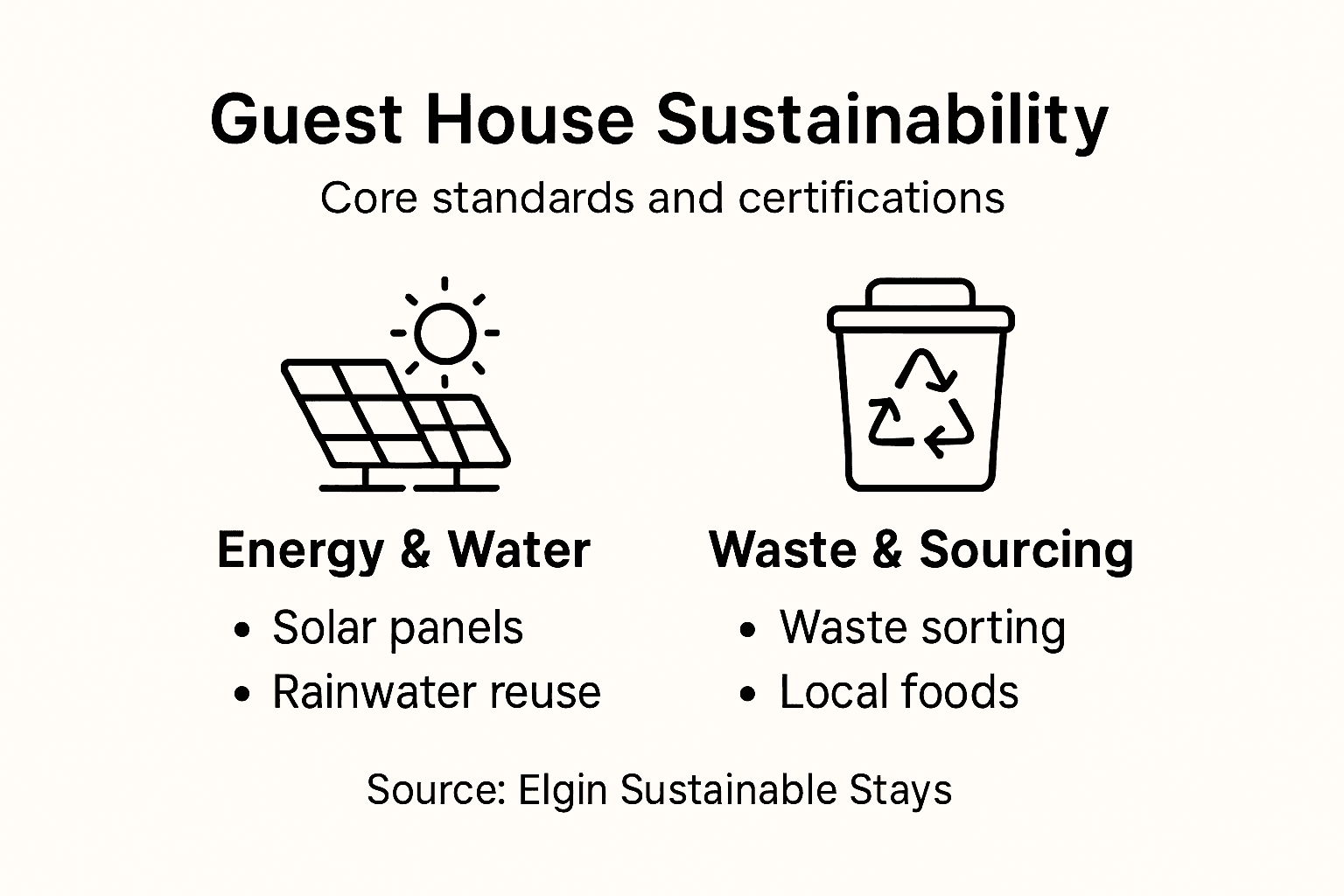
Renewable energy systems (solar panels, wind turbines)
Water conservation technologies
Locally sourced and organic food offerings
Comprehensive recycling and waste reduction programmes
Energy-efficient lighting and appliances
Use of eco-friendly cleaning and toiletry products
Minimal single-use plastic policies
Waste management represents a critical component of sustainable guest house operations. Successful establishments implement sophisticated strategies that go far beyond traditional recycling, creating closed-loop systems that dramatically reduce environmental footprint.
Implementing sustainable practices requires a holistic approach. Guest houses must consider every aspect of their operation, from building materials and energy consumption to guest interactions and local community engagement. This comprehensive methodology ensures that sustainability becomes an integrated philosophy rather than a superficial marketing strategy.
Genuine sustainability is about creating positive environmental and social impact, not just reducing negative consequences.
Guest houses committed to sustainability often develop innovative approaches that inspire guests and contribute to broader ecological awareness. These might include permaculture gardens, educational programmes about local ecosystems, and partnerships with regional conservation initiatives.
Pro tip: Request a sustainability report or tour from your guest house to understand the depth of their environmental commitment.
Legal requirements for guest houses in Scotland
Operating a guest house in Scotland involves navigating a complex landscape of legal requirements designed to ensure guest safety and maintain high hospitality standards. Short-term let licensing represents a critical regulatory framework that guest house owners must carefully understand and implement.
Key legal requirements for Scottish guest houses include:
Obtaining a short-term let licence from the local council
Meeting mandatory safety conditions
Passing fit and proper person assessments
Acquiring comprehensive public liability insurance
Complying with fire and safety regulations
Maintaining current gas and electrical safety certifications
Adhering to local planning permission requirements
Licensing regulations are particularly stringent under the Civic Government (Scotland) Act 1982, which establishes comprehensive guidelines for short-term accommodations. Guest house licensing requirements vary depending on the specific location and property characteristics, making professional legal consultation essential.
Scottish authorities take guest accommodation regulations seriously, with significant penalties for non-compliance.
Safety certifications form a crucial component of legal compliance. Guest houses must demonstrate rigorous standards through documented evidence of:
Annual gas safety inspections
Electrical installation condition reports
Portable appliance testing
Fire safety equipment maintenance
Emergency evacuation procedures
Property owners must also consider additional regulations related to building use classifications, potential planning permission requirements in control areas, and specific local council stipulations.
Pro tip: Consult a local legal specialist familiar with Scottish hospitality regulations to ensure complete compliance before launching your guest house.
Practical costs, risks and common pitfalls
Navigating the financial landscape of guest house operations in Scotland requires careful planning and thorough understanding of potential expenses and risks. Short-term let operating costs can quickly accumulate, making comprehensive financial preparation essential for prospective guest house owners.
Typical financial considerations include:
Initial licence application fees
Safety certification expenses
Mandatory insurance premiums
Planning permission costs
Compliance documentation preparation
Professional consultation fees
Potential renovation or safety upgrade investments
Financial risks represent a significant concern for guest house operators. Potential penalties for non-compliance can be substantial, with fines reaching up to £2,500 for operating without appropriate licensing or failing to meet regulatory standards.
Underestimating compliance costs can transform a promising hospitality venture into a financial liability.
Common pitfalls in guest house management often stem from administrative oversights and regulatory misunderstandings. Short-term accommodation licensing requires meticulous attention to detail, with potential risks including:
Missing licence renewal deadlines
Misinterpreting local authority requirements
Failing to maintain comprehensive safety documentation
Neglecting neighbour communication protocols
Overlooking specific control area regulations
Additional hidden costs might involve unexpected safety upgrades, increased insurance premiums, and potential legal consultations to ensure full compliance with evolving Scottish hospitality regulations.
Pro tip: Create a comprehensive financial buffer of at least 20% above your initial cost projections to manage unexpected compliance expenses and regulatory requirements.
Discover Truly Sustainable Stays with Stag and Barrel
Navigating the complexities of eco-friendly guest houses in Elgin can be challenging with rigorous sustainability standards and legal requirements. Whether you are a guest seeking genuine environmentally responsible accommodation or an owner aiming to meet certification and compliance demands, Stag and Barrel is your trusted partner. We understand the vital importance of integrating renewable energy, waste management, and local community support into your stay or business, ensuring you contribute meaningfully to sustainability goals.
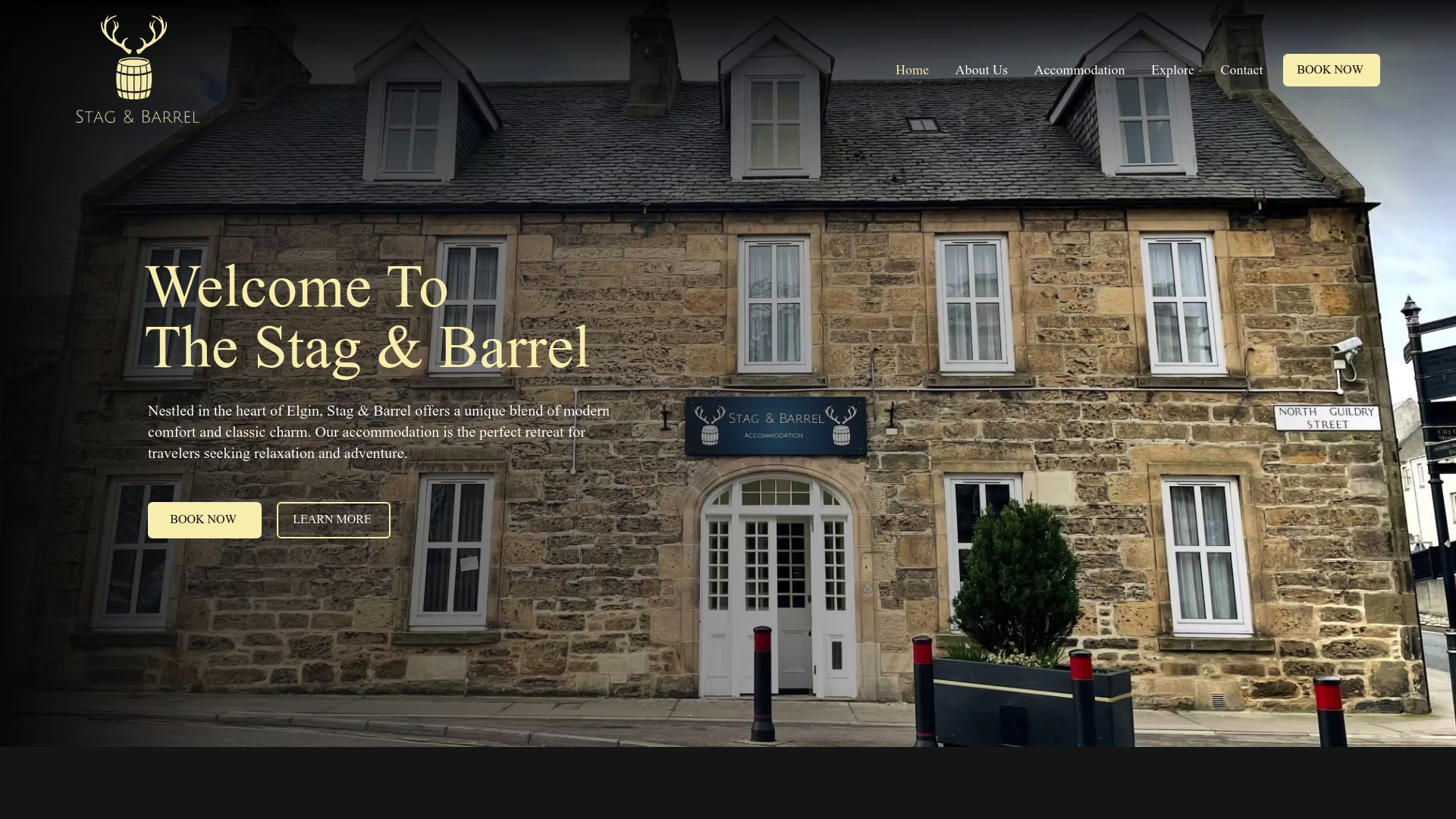
Take the next step towards authentic sustainable hospitality by exploring options at Stag and Barrel. Our curated selection reflects a commitment to ecological responsibility while offering comfort and legal compliance insights tailored for Scottish guest houses. Learn more about guest house trends in 2026 and how to align with best practices that balance environmental impact and exceptional guest experiences. Act now to make your eco-friendly stay or venture in Elgin a genuine success.
Frequently Asked Questions
What defines an eco-friendly guest house?
Eco-friendly guest houses prioritise environmental sustainability by integrating practices such as renewable energy usage, waste management, and support for local conservation efforts to minimise ecological impact while providing comfortable accommodations.
How can I identify a truly sustainable guest house?
To identify a genuinely sustainable guest house, look for specific eco-certifications, such as Green Key or EarthCheck, and inquire about their sustainability practices. Avoid accommodations that rely solely on vague green marketing claims.
What are some key sustainability features to expect in eco-friendly guest houses?
Key sustainability features often include renewable energy systems, water conservation technologies, locally sourced food, comprehensive recycling programmes, and the use of eco-friendly cleaning products.
What legal requirements must guest houses comply with?
Guest houses must obtain a short-term let licence from the local council, meet safety conditions, carry liability insurance, and adhere to fire and safety regulations, among other requirements set forth by local authorities.
Recommended


Comments